
Why Young People Need Hospice Care Too
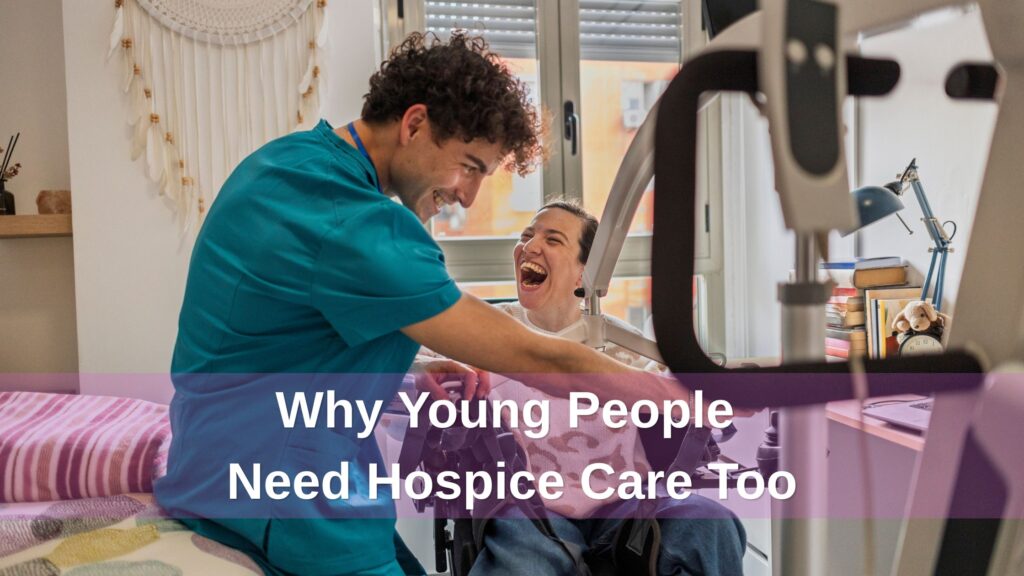
The word “hospice” tends to conjure a particular image – peaceful gardens, soft furnishings, and an older person resting after a long life. That image isn’t wrong but it isn’t the whole picture either. Young people need hospice care too.
Hospices in the UK support people of every age, from newborn babies to grandparents. There are over 50 children’s hospices across the country, and many adult hospices care for patients in their twenties, thirties and forties. The needs of younger people aren’t the same as those of older patients, and their care needs to look different, too.
This is a quiet yet important strand of hospice work that doesn’t get talked about enough.
Hospice care isn’t only about the end of life
Before we get to younger patients, a quick myth-buster: hospice care isn’t only the final few days or weeks of someone’s life. Most hospice support happens long before then – often months or even years before. Pain and symptom management, respite stays, day services, family support, and bereavement help. People with life-limiting illnesses can be in and out of their hospice’s care for a long time, sometimes returning home between admissions.
For younger people in particular, this matters. A teenager with a complex condition may need hospice support across many years. The relationship with their hospice becomes part of growing up.
There is a documented lack of teenage and young adult specific hospice care in the UK. This leaves many 16-25 year olds falling into a gap between paediatric and adult services.
Source: UK Parliament
How many young people use hospice services?
The honest answer is more than most people realise.
Together for Short Lives, the UK charity representing the children’s palliative care sector, estimates that around 99,000 babies, children and young people across the country are living with life-limiting or life-threatening conditions. Around 53 children’s hospices offer specialist support to them and their families.
For young adults specifically, there are services tailored to ages 16 to 25 – sometimes within children’s hospices, sometimes integrated into adult palliative services. It’s a smaller cohort than older patients needing hospice care, but the support each young person and their family needs is often more intensive and runs over far more years.
What’s different about hospice care for younger people?
Almost everything, in practical terms.
The conditions are different. Young people are less likely to have cancer (though some do) and more likely to have complex, progressive, non-malignant conditions – neurological disorders, metabolic conditions, or life-limiting genetic illnesses. Many of these need specialist equipment and specialist knowledge that general hospitals can’t easily provide.
The timescales are different. A young person may live with their condition for years or decades. Hospice care has to support not just dying well but living as fully as possible alongside the illness.
Childhood and adolescence don’t pause. Children grow up. Teenagers want independence. Young adults want relationships, work, education, and fun. The care has to make space for all of that.
The whole family needs support. Parents, siblings, grandparents – children’s hospices typically work with the entire family, not just the patient. Sibling support groups, parent counselling and grandparent meet-ups are common features.
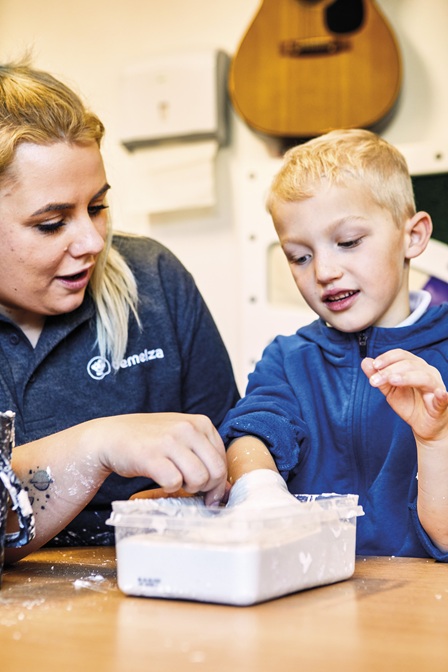
Hospice Aid UK was founded 25 years ago with a single, clear purpose: to raise funds that go directly to hospices, helping them to care for patients and families when they need it most.
What does it actually look like, day to day?
Less of what you’d expect, and more of what you wouldn’t.
In a typical children’s or young people’s hospice, you’ll find:
Music therapy and art therapy – a way for non-verbal children to communicate and for older children to process difficult feelings.
Hydrotherapy pools – heated, accessible, fantastic for children with limited mobility who can move freely in water.
Multi-sensory rooms – designed for children who experience the world differently because of their conditions.
Schoolwork support – for children whose hospital admissions disrupt their education.
Sibling groups – brothers and sisters of seriously ill children carry an enormous burden, often quietly, and dedicated support helps them through it.
Bereavement work for children – both for children losing a parent or grandparent, and for families after a child dies.
Specialist nursing for complex conditions – round-the-clock care from people who know the child as a whole person, not just a set of symptoms.
Assistive technology – eye gaze communication aids, communication boards and accessible toys are part of daily life in many children’s hospices.
And, importantly, there’s laughter. Birthday parties. Halloween. Sleepovers. School proms. Day trips. Hospices for children and young people are not sad places to wait. They’re full of life – which is exactly the point.
The transition gap
One specific issue worth knowing about: the move from children’s to adult services around age 16 to 18.
Children’s hospices typically support patients up to around 18, sometimes a little older. Adult hospices traditionally cared for people in the last weeks or months of life with conditions like cancer. The gap in between – young adults aged 16 to 25 living with long-term life-limiting conditions – has historically been poorly served.

Things are improving, though. Dedicated young adult services now exist within some children’s hospices, including the Young Adult Unit at Douglas Macmillan in Stoke-on-Trent, which Hospice Aid UK has supported. Some adult hospices have also developed specialist young adult provision. But it remains an area of real need, and one we keep a close eye on when grant requests come in.
How does Hospice Aid UK help?
We’re a national grant-giving charity – we don’t run hospices ourselves; we give money to hospices that need help paying for specific, practical things.
A few recent examples of grants supporting children and young people:
£5,115 to Demelza Hospice Care for Children for an eye gaze communication aid, helping non-verbal children to communicate through their eyes
£10,000 to Douglas Macmillan Hospice towards their Young Adult Services
£1,453 to Claire House Children’s Hospice for three days of round-the-clock nursing care
These aren’t life-changing sums on their own. But year after year, they add up to a steady stream of practical help that hospices can put to good use, straight away – often for exactly the kind of equipment and services that bigger funders are reluctant to support.
What does this mean for the people who support us?
If you’ve been donating to hospice care for a while, you may have pictured an older person being made comfortable at the end of a long life. That’s absolutely part of what your support enables. But it’s also a child learning to communicate through their eyes after years of being unable to speak. A teenager getting respite care so their parents can sleep through the night for the first time in months. A young adult having somewhere age-appropriate to be looked after, not just a hospital ward filled with much older patients.
Hospice care reaches further than most people first imagine. And the more of that picture you can see, the more meaningful it becomes to support it.
Will you help us support hospice care for children and young people?
Your donation helps fund the equipment and services that children’s and young people’s hospices rely on. A regular monthly gift – even a small one – helps us respond quickly when a hospice gets in touch with an urgent need.
Whatever You Can Give, It Matters. And Right Now, It matters More Than Ever.
At Hospice Aid UK, we’ve spent nearly 25 years making sure hospices can be there when families need them. With your fabulous help, we can keep going.
If you’d like to know more about our work, explore our website or get in touch at info@hospiceaid.org.uk.
Donate Now
Share this post with someone who might need it.
Visit our Support Us page to find out more about supporting Hospice Aid UK or contact us for help and advice about your donation.
Find out more about our partnerships for businesses of all sizes and how to choose Hospice Aid UK as your Charity of the Year