
How Do Hospices Support Family Carers?
Carers Week is a chance to do something we don’t do often enough. To say thank you, properly, to the millions of people across the UK who are looking after someone they love.
Family carers are remarkable. The trouble is, most of them don’t think of themselves that way. Ask a daughter who’s looking after her father with cancer how she’s coping, and she’ll tell you she’s fine. She’ll laugh, ask about your weekend, and top up your tea. That’s the kind of energy and dedication carers bring day in, day out, while juggling jobs and kids and washing and shopping and everything else life keeps throwing at them.
This week, June 8-14, is National Carers Week. It’s time to recognise them properly and to talk about the people who notice them all year round.
How many family carers are there in the UK?
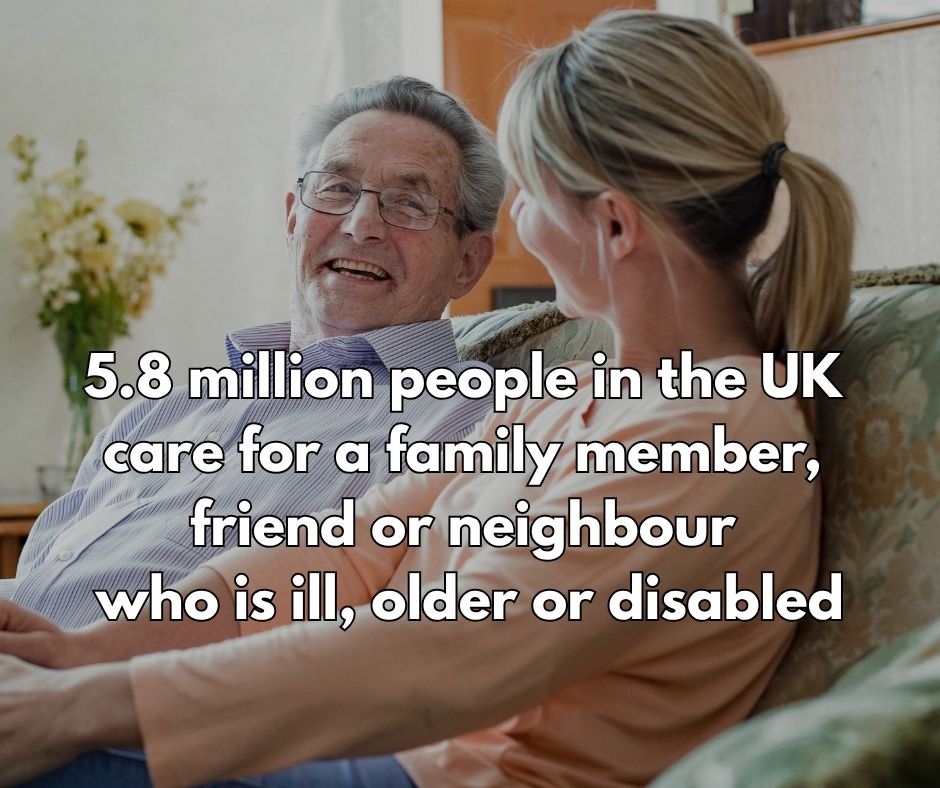
Around 5.8 million, according to Carers UK. That’s roughly one in ten adults. Most don’t call themselves carers. They think of themselves as a wife, a husband, a son, a daughter, a mum, a dad or a friend.
The work they do is worth around £184 billion a year to the UK economy, according to research by Carers UK. That’s roughly what a second NHS would cost to run! It’s a staggering figure, and it’s powered entirely by love, stubbornness, and a refusal to leave anyone behind.
Unpaid carers save the UK economy an estimated £184 billion each year. That’s the equivalent of a second NHS!
What does a family carer actually do?
The list is long, and most of it gets done without anyone outside the family ever noticing. Cooking and feeding. Lifting and helping. Hospital appointments and prescription runs. Filling in forms. Chasing professionals. Researching conditions at midnight. Making the bed for the fifth time that day. Remembering when the next dose is due. Smiling at visitors when you’re shattered. Keeping things normal for the rest of the family. Booking the boiler service. Phoning the in-laws, who keep asking how she is. Doing the thing only you can do, because you’re the one who knows.
It’s a full-time job that nobody hands you a contract for. It’s done out of love, and because you couldn’t bear not to.
How do hospices help family carers?
Hospices are full of people who completely understand the life of a carer.
Hospice staff have seen carers in every imaginable shape and form. They know what burnout looks like at twenty paces. They can spot the carer in the room who hasn’t slept in days, or the one who’s about to cry but trying very hard not to. And they know what to do about it.
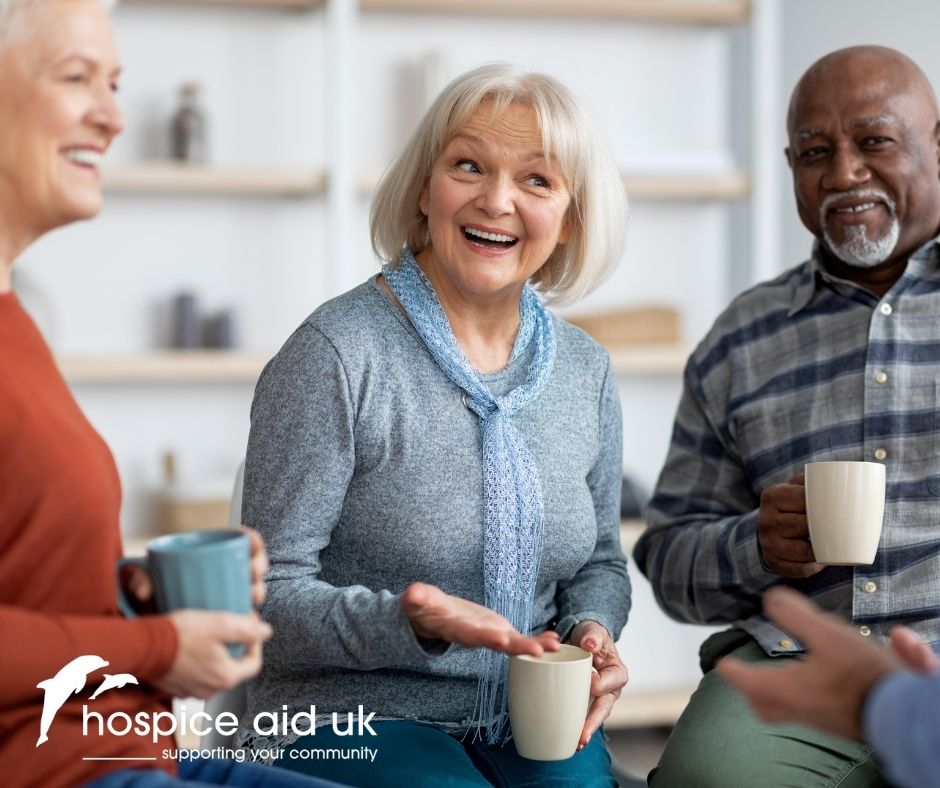
It might be a properly hot cup of tea and an honest five-minute chat. It might be waving someone towards an empty sofa in the family room and saying, “Go and have ten minutes, we’ve got this.” It might be a phone number for the right local service, or a referral to a counsellor who actually knows what they’re talking about, or a Wednesday morning carers’ group with cake.
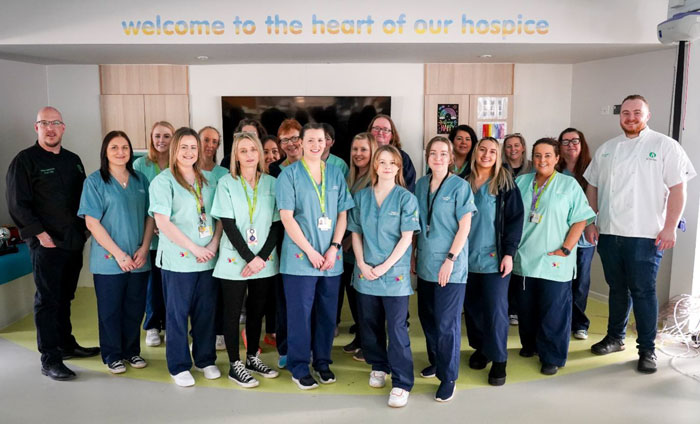
Hospice staff aren’t saints. They’re not angels, either. (They’ve often called both, and neither is fully accurate) These are real people with mortgages, chaotic Mondays and a healthy sense of humour – nurses, care assistants, chefs, chaplains, volunteers, physiotherapists, cleaners, gardeners and admin staff, all of whom happen to be very good at what they do. Some have been carers themselves. Many got into this type of work because they’ve seen firsthand what good hospice care can do for a family, and they wanted to be part of that.
What hospices try to do is to take a life that’s been made less ordinary by illness and make it ordinary again. To find the bits of normal. A cup of tea, puzzle, or joke. The dog visit or music playlist. A haircut and a bit of pampering. A much looked forward to wedding anniversary celebrated in the family lounge. Art classes on a Thursday afternoon. The garden in summer, a film night and even the choir rehearsal.
For a carer, that ordinariness is everything.
Depending on the hospice and the situation, here’s a snapshot of the support that hospices offer
carers:
Training and confidence. Practical know-how for handling medication, lifting safely, spotting changes. Things that turn worry into reassurance.
Respite breaks. A short hospice stay for the person you’re caring for means a proper sleep for you, a meal that isn’t reheated, and a chance to remember who you were before all this.
Counselling and emotional support. For the carer as a person in their own right. Not “how to support your loved one”, but “how are you doing this week”.
Carers’ groups. Often split by relationship: spouses, adult children, parents of seriously ill children. Tea, cake, honesty, occasional howling laughter at things that aren’t really funny but make you laugh anyway. The recognition of “we know what your version of this is like” matters more than people expect.
Bereavement support. The role doesn’t end when the person you’ve cared for dies. Hospices walk with families through grief, sometimes for months, sometimes for years. Children’s hospices do sibling work. Adult hospices run widow and widower meet-ups. It’s a part of hospice care most people don’t realise exists.
Whole-family thinking. A hospice doesn’t treat a patient in isolation. It sees a household, a network of people, a carer in the middle of it all. That shift in perspective is the thing that makes hospice care feel different from other corners of the medical world.
If you’re able to support our work, don’t forget to tick the Gift Aid box ✅
What's the Carers Week theme this year?
Carers UK is calling it “Building Carer Friendly Communities”. They’re asking how the places, services and groups in our lives can recognise, understand and value the people looking after someone they love.
Hospices have been doing this for decades. They’re carer-friendly communities by design. Imaginative ones too, often full of music and art and therapy dogs and proper coffee and stained-glass windows and choirs and gardens that change with the seasons.
These are not sombre places, whatever people might expect. They are full of life, in the truest sense of those words.
How does Hospice Aid UK fit in?
We’re a grant-giving charity. We don’t run hospices ourselves. We give money to UK hospices that need help paying for specific things they want to do.
When you donate, that money goes into a pot that funds the practical kit and services that hold families together. Recliner chairs so a husband can sleep alongside his wife. Communication aids like the eye gaze machine we funded for Demelza Hospice Care for Children earlier this year, which lets non-verbal children talk to their parents and carers. Counselling space. Equipment for the carers’ group room. The cuppa-and-cake stuff that you might call small, but that families remember for the rest of their lives.
These are exactly the kind of costs that hospice budgets struggle to cover from statutory funding alone. They’re the bits that turn a hospice into a place you’d want to be, rather than somewhere you have to be.
What can the rest of us do this Carers Week?
Two things, if you have a minute.
First, if you know a family carer, tell them you can see what they’re doing and it’s important they are cared for too. Offer to bring round a meal next Thursday, or take their kids to the park on Saturday, or just sit and have a coffee whenever they can spare half an hour.
Second, if you’d like to support the work that hospices do for families, your donation goes straight into the next grant we send out.
The people who care for someone they love are doing a beautiful, exhausting, but deeply important thing. The least the rest of us can do is back them up.
To every family carer reading this: thank you. You are seen. You are appreciated. You are remarkable. And on the days when it feels impossible, the people at your local hospice are absolutely on your side.
At Hospice Aid UK, we’ve spent over two decades making sure hospices can be there when families need them. With your fabulous help, we can keep going.
If you’d like to know more about our work, explore our website or get in touch at info@hospiceaid.org.uk.
Find out more about our partnerships for businesses of all sizes and how to choose Hospice Aid UK as your Charity of the Year